Key points
- The death toll from the Southern Ijaw boat accident in Bayelsa has risen to 29, and over 50 survivors are in hospital.
- The Federal Government has ordered NIWA to investigate. It raised the issues of missing life jackets and no passenger list.
- Governor Diri alleges the boat was unfit and used an unauthorised loading point. A survivor says it was overloaded. Neither claim is confirmed yet.
- Probes and promises are not new. What will matter is inspections, licences and life jackets being enforced every day.
- Citizens can use FOI requests, lawmakers and budget hearings to keep the pressure on.
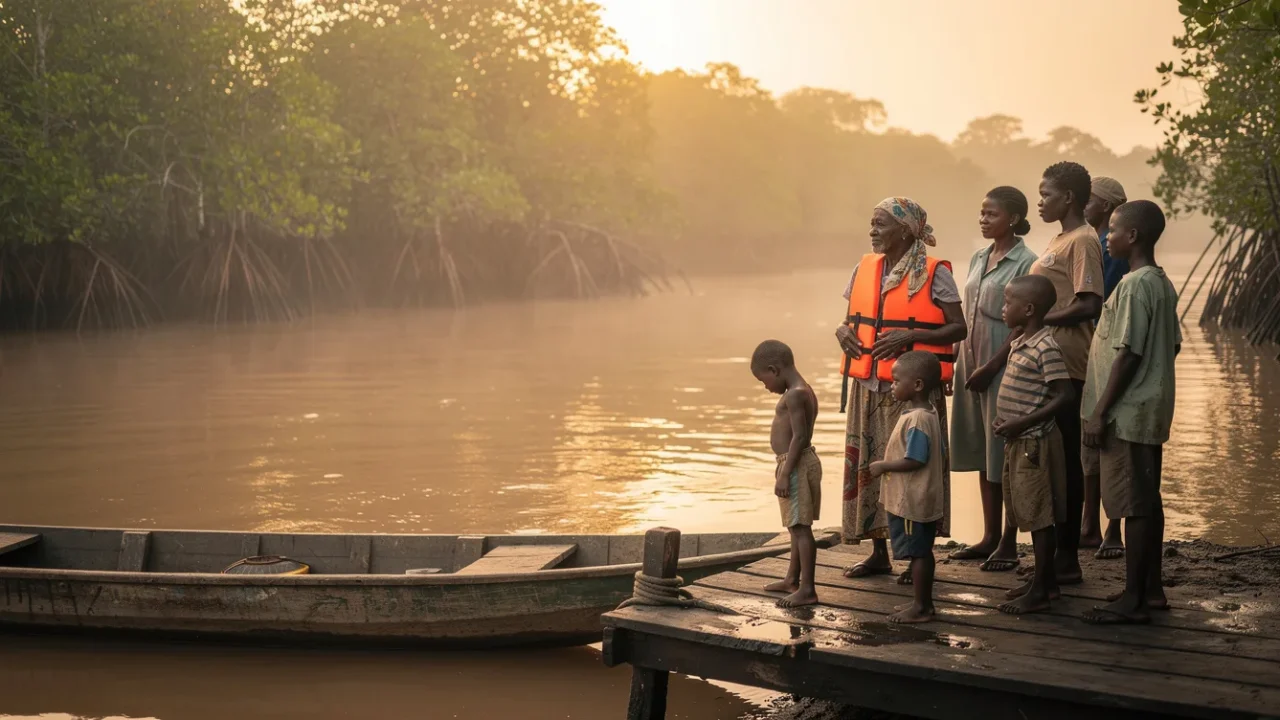
Twenty-nine people are dead after a wooden boat carrying mourners capsized in Southern Ijaw, Bayelsa State. More than 50 survivors are receiving treatment in hospitals, and the final toll is still not known.
The boat was taking people from Ayama to Ukubie for a burial. Now two communities are burying their own. If you have ever boarded a boat without a life jacket because there was no other way to travel, this story is yours too.
A journey to a burial that ended in grief
It happened on Friday, November 20, at about 11 a.m., near Oweikorogha Community in the Ukubie area. Police say the boat developed a mechanical fault on the water.
A survivor has alleged that the boat was overloaded with passengers and their belongings. It was a wooden passenger boat, popularly called a “love boat”. That claim has not been confirmed.
Governor Douye Diri gave the figure of 29 during a visit by Vice President Kashim Shettima. He said the number could still change. The boat had not yet been recovered, and some passengers might still be trapped inside.
Diri called the accident avoidable. He alleged that the boat was not fit for river travel and had left from an unauthorised loading point. He said the state government would pay the survivors’ medical bills and feed them.
President Bola Tinubu sent condolences and approved ₦250 million in support for the families of the victims. Local divers, the Marine Police and NEMA worked on the rescue and search.
Probes ordered, hard questions remain
Within two days, the Federal Government ordered an immediate investigation. The Minister of Marine and Blue Economy, Adegboyega Oyetola, told the National Inland Waterways Authority (NIWA) to find the immediate and remote causes. He asked it to send its findings to him and to work with the Bayelsa State Government.
The minister raised two worries. Passengers reportedly wore no life jackets. And there was allegedly no passenger manifest, which is simply a list of who is on board. He said proper passenger records are a critical safety requirement that must be strictly enforced.
“Safety lapses on our waterways are no longer acceptable. The Federal Government will not fold its arms and watch its citizens perish on the waterways. We must get to the root of this tragedy and ensure that those responsible for enforcing safety regulations do their jobs,” Oyetola said.
The last sentence of that quote is the one to watch. It admits that someone is meant to enforce the rules, and that the job may not have been done.
Oyetola also recalled that he visited Bayelsa on May 2, 2025, and gave out 3,500 life jackets. That was a good step. But our view is plain: a life jacket that is handed out but not worn saves no one. Someone must insist on it before the boat leaves the bank.
Rules exist. Who makes sure they are followed?
The opposition has joined the call. Atiku Abubakar, the presidential candidate of the ADC, asked the Federal and Bayelsa governments to investigate and to enforce existing rules. He named boat overloading and the use of unseaworthy vessels. The statement came from his campaign council, in a political season. But the point stands whichever party makes it.
The council’s media director, Kola Ologbondiyan, said governments must provide standard, well-maintained boats, enough life jackets, working jetties and trained boat operators. He added:
“For millions of Nigerians in the Niger Delta and other riverine areas, water transportation is not a luxury; it is a daily necessity. Their safety must never be treated as an afterthought.”
That is true. A trader taking goods to market, a student going to school, a family going to a burial: for many, there is no bridge and no road.
Oyetola has again urged state governments to gradually replace wooden passenger boats with fibreglass ones. Governor Diri asked the Federal Government for more roads in Bayelsa, so fewer communities depend on the water. Both ideas make sense. Both will take years.
Meanwhile, people will board boats again next week.
So the real question is simple. Everyone has spoken. Probes are ordered, condolences are sent and promises are made. Nigerians have heard strong words after tragedies before. The risk is that attention moves on once the burials are over.
What would real change look like? Officials at the jetty checking that a boat is fit to carry people. Licences that are actually checked. A written passenger list before departure. No life jacket, no sailing. Boats that fail the test are stopped, whoever owns them. The Federal Government and state governments both have a part to play, and both should be held to the same standard.
One more test is whether NIWA’s findings are made public. A report that sits in a minister’s office helps no family in Ayama or Ukubie.
Keeping the promise alive
Ordinary people have more power here than they think. You can write to NIWA or the Ministry of Marine and Blue Economy under the Freedom of Information Act. Ask how many passenger boats on your waterway were inspected last year, and how many are licensed.
You can contact your State House of Assembly member and your local government and ask what they are doing about jetties and life jackets. You can attend budget hearings and ask whether money is set aside for safer boats and safety enforcement.
Where you can, ask for a life jacket and refuse to board an overloaded boat. Community groups and transport unions can push for this together.
Twenty-nine families cannot be given their loved ones back. But if enough of us keep asking, and keep asking politely and peacefully, this can be the accident that finally changed how we travel on our rivers.
What you can do
Change starts with citizens who show up. Here is how you can act on this story:
- Send an FOI request to NIWA asking how many passenger boats on your waterway were inspected and licensed last year.
- Contact your State House of Assembly member and ask what is being done about jetties, life jackets and boat inspections.
- Attend your local budget hearing and ask for money to be set aside for safer boats and waterway safety enforcement.
What is the most important thing governments must do to make inland waterways safer?
Tap to vote and see what other readers think.
Based on reporting by: Bayelsa boat tragedy: Atiku demands probe, stricter safety measures (Punch Newspapers); FG orders probe into deadly Bayelsa boat accident (Vanguard News); Oyetola orders probe into Bayelsa boat accident (Punch Newspapers); Atiku mourns victims of Bayelsa boat mishap (Daily Post Nigeria); Death Toll From Bayelsa Boat Accident Rises To 29 (Channels Television)
Newsletter
Get stories like this every morning.
Nigeria's politics and public life, explained plainly. Choose every morning or once a week. Free, and you can leave any time.
Spotted an error? Tell us and we will correct it. Read our editorial standards.
Found this useful? Share it with someone who should read it.