Key points
- At least 21 people, eight soldiers and 13 construction workers, were killed by insurgents while Mayanti in Borno was rebuilt.
- The project gave 500 houses, 2,000 semi-permanent shelters and a school. Work ran from August 2025 to October 2026.
- The governor said Mayanti was attacked four or five times during construction and promised to keep improving security.
- No details have been made public on how the site was guarded, so residents and citizens are right to ask.
- Citizens can write to lawmakers, attend budget hearings and use Freedom of Information requests to follow security plans.
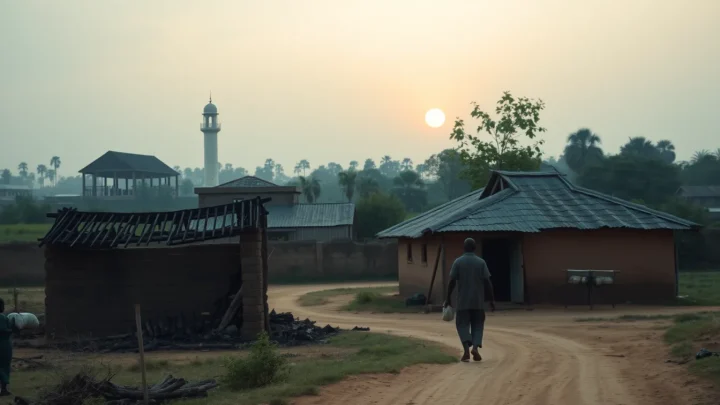
At least 21 people were killed by insurgents while the Mayanti community in Borno State was being rebuilt. Eight of them were soldiers. Thirteen were construction workers.
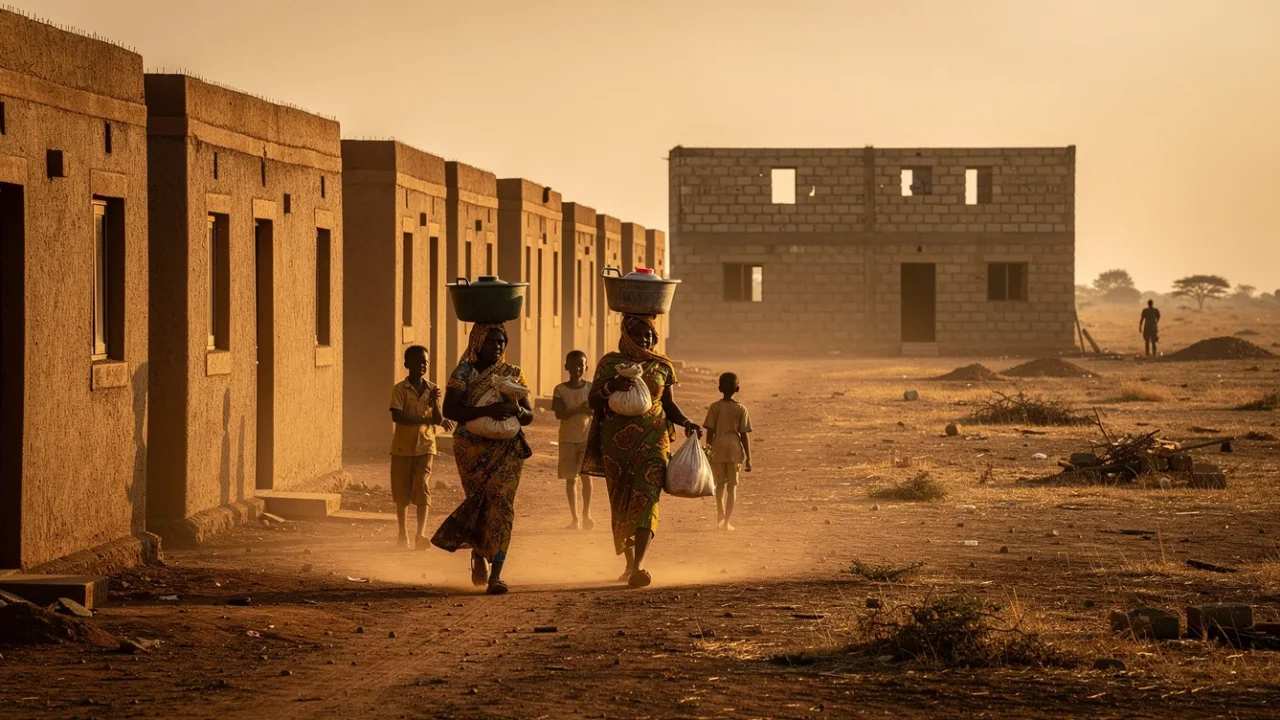
The figure came out on Saturday, when 500 houses, 2,000 semi-permanent shelters and a school were opened in Mayanti, in Bama Local Government Area. For every Nigerian, the question is simple. If you go back and rebuild your home in such a place, who keeps you safe?
A tribute at the opening
Abba Wakilbe, Borno’s Commissioner for Education, Science, Technology and Innovation, heads the resettlement committee. He said work began in August 2025 and ended in October 2026.
Before he asked Governor Babagana Zulum to commission the project, he paid tribute to the dead. Eight soldiers and 13 construction workers lost their lives during the work, including Major Mairiga.
“Let me pay a special tribute to those who have fallen in the cause of this work, starting with Major Mairiga and seven soldiers with thirteen construction workers who lost their lives in the cause of the one year of this project. We pray that Allah grant them Jannah,” Wakilbe said.
He said their sacrifice helped make the restoration of the community possible.
Governor Zulum praised the committee for finishing the job despite repeated attacks. He recalled that Mayanti was attacked at least four or five times while building was going on. The team, he said, stayed committed.
What the speeches did not say
Soldiers died on the site, so it was not left wholly without protection. That much is clear. What has not been made public is how the site was guarded, how many troops were posted, or how many people died in each attack.
Those details matter. A family deciding whether to go home needs more than a thank-you speech.
In our view, building in a place the insurgents still threaten is very hard. Workers must move materials and spend long days in the open. Soldiers who guard them become targets too. Nobody should pretend this is easy.
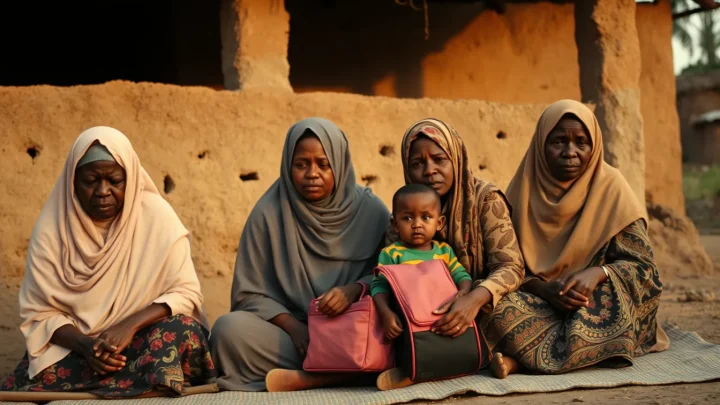
Still, the work was finished, and that deserves credit. Families now have houses and shelters to return to, and children have a school. The governor also commended the residents who have already gone back. He assured them his administration would keep working to improve security and help them rebuild their livelihoods.
An assurance is a good start, but it is not yet a plan. Houses are only the first step. A farmer needs safe land. A trader needs a safe road. A child needs a safe walk to school.
The same pressure in Kaduna
The same weekend showed how thin the line can be. In Kaduna State, suspected terrorists abducted children from the Boys’ and Girls’ Brigade on Sunday, 22 November, during a morning road walk at Mother-Cat Community. Troops rescued 18 of them and are still searching for four others.
The Army said troops moved quickly after a distress call and chased the kidnappers through the bush. It also said it would keep up offensive operations and intelligence-led patrols to protect vulnerable communities. Residents were asked to stay alert and pass on credible information.
That quick response is welcome. But the lesson from both places is the same. Protection works best when it is in place before an attack, not only after it.
What returning families can fairly ask for
No official can promise that an attack will never happen. But the Constitution says the security and welfare of the people is the main purpose of government. That is a duty, not a favour.
Soldiers and police answer to the federal government. A governor can support them and push for more help, but does not command them. So protecting a rebuilt community takes both levels of government working together, and both should be open about who does what.
It is fair for residents and citizens to ask a few plain things. Is there a written security plan for Mayanti and other resettled communities? Who is in charge of it? How can residents raise an alarm, and who answers? Will the public be told how it is going?
These are not attacks on anyone. They are the questions any good government should be glad to answer, whichever party is in power.
Ordinary Nigerians can help get those answers. Write to your House of Representatives member and your state assembly member and ask what they are doing about security in resettled communities. Go to town halls and budget hearings and ask how much is set aside for protecting reconstruction. Use the Freedom of Information Act to request project and security records from public offices. Join community and civic groups that track promises. The people who died in Mayanti deserve more than a tribute. They deserve a place where the families who return can stay.
What you can do
Change starts with citizens who show up. Here is how you can act on this story:
- Write to your House of Representatives and state assembly members and ask what they are doing to protect resettled communities.
- Attend a town hall or budget hearing and ask how much is set aside for security at reconstruction sites.
- Send a Freedom of Information request for the project contract and security arrangements for a rebuilding scheme near you.
What would make you feel safest about returning to a rebuilt community?
Tap to vote and see what other readers think.
Based on reporting by: Insurgents kill 21 people during reconstruction of Borno community (Daily Post Nigeria); Troops rescue 18 abducted children, hunt for four others in Kaduna (Vanguard News)
Newsletter
Get stories like this every morning.
Nigeria's politics and public life, explained plainly. Choose every morning or once a week. Free, and you can leave any time.
Spotted an error? Tell us and we will correct it. Read our editorial standards.
Found this useful? Share it with someone who should read it.